Torticollis & Plagiocephaly in Westchester County
Your baby always looks the same way. The head tips toward one shoulder, and lately one side of it has started to look a little flatter. You are not imagining it, and asking about it this early is the whole point.
What causes torticollis and plagiocephaly?
Torticollis is a tilt. A muscle running from behind the ear to the collarbone is tighter on one side, so the head tips that way and the face turns to the other. Plagiocephaly is a flat spot, and the two travel together, because a baby who always rests on the same part of the skull will flatten it. There is a reason behind the pattern, and finding it is what an evaluation at our Port Chester and Mt Kisco clinics is for.
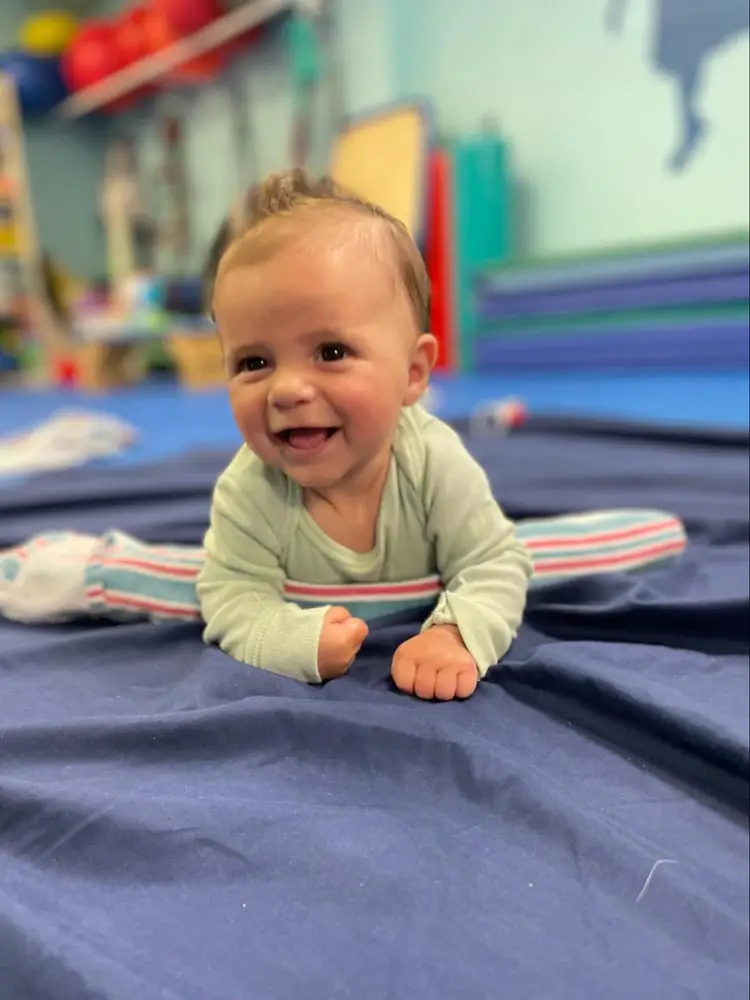
The sternocleidomastoid runs from behind the ear to the collarbone. It tips the head toward one shoulder while turning the face to the other, which is exactly the posture you noticed. When it is short on one side, your baby physically cannot bring the chin to the tighter shoulder. This is a length problem, not a pain problem, and patient range of motion work changes it.
Space runs short at the end of pregnancy, especially with twins, a first baby, or low fluid. If your baby spent those last weeks with the head wedged one way, the neck muscles on that side finished growing slightly shorter than the ones opposite. Nothing you did caused it. It is a fit problem, and a common reason a newborn arrives already favoring a side.
Breech presentation, a long or very fast labor, and assisted deliveries using forceps or vacuum all raise the odds of neck asymmetry. Sometimes there is a small firm thickening inside the muscle itself, which softens over the first months. Any of these is worth an evaluation, simply because range of motion work is far easier on a small baby than on a strong, opinionated toddler.
Babies orient toward light, sound and faces. If the crib sits against a wall, or feeding tends to happen mostly on one side, a newborn turns the same way hundreds of times a day. Muscles adapt to whatever they repeat. This is the most workable cause on the list, and a surprising amount of it responds to changing where your baby sleeps, plays and looks.
Back sleeping is the right call and it saves lives, so nothing here argues with it. The trade off is that infant skulls are soft, and steady pressure on one spot flattens it. Once a flat area forms, the head rolls back into it the way a ball settles into a divot, reinforcing the turn that created it. Breaking that loop takes rotation, upright time, and tummy time your baby can tolerate.
A small number of head tilts are not muscular at all. Vision differences, reflux, hearing on one side, or a difference at the top of the spine can each make a child hold their head crooked. Torticollis also travels with hip differences often enough that hips get screened routinely. If something other than muscle is driving the tilt, we say so and point you toward the right provider.

How physical therapy in Port Chester and Mt Kisco helps.
Treatment starts with measurement rather than guessing. We check how far the head turns and tilts in each direction, look at head shape from above, and watch what the rest of the body is doing, because a tight neck rarely stays only a neck problem. Sessions then combine passive and active range of motion, soft tissue and joint mobilization, Total Motion Release techniques, kinesiotaping, strengthening on the weaker side, gross motor skill work, tummy time training and positioning recommendations for home. Sessions are built to be fun, effective and pain free. Your baby is being played with, not worked on. Where a head shape needs more, we refer to complementary providers.
Two things parents want settled before booking. New York State requires a physician's prescription for pediatric physical therapy, and our physician resources page gives your pediatrician the codes and referral language. And Developmental Steps is not an Early Intervention provider. We are what families use alongside those services, or while they wait, because the sooner asymmetry is addressed, the shorter treatment tends to be.
What to expect, from the first visit on.
Pain
Your baby is not hurting, so this first phase is about the restriction rather than pain. We measure rotation and side bending both ways, look at head shape, screen the hips, and watch rolling and tummy time. You leave knowing which side is tight, how tight, and what is realistic. That baseline is what later sessions get compared against.
Prime
Before a baby can use a new position, the range has to exist. We work the tight side with soft tissue and joint mobilization and gentle sustained stretching, add kinesiotaping when a correction needs help holding, and build strength on the long, weak side. Tummy time gets rebuilt in doses your baby can tolerate.
Perform
Range that never gets used quietly disappears. This is where the new rotation turns into skills: reaching across the middle, rolling in both directions, propping, sitting, and crawling with weight through both arms evenly. We chase whichever milestone your baby is closest to, because real motor skills are what keep the correction honest.
Prevent
You do most of the work between visits, so we make it doable. You leave with a short home program, carrying and feeding positions that favor the tight side, and small changes at home. We re-measure as you go, and when the numbers stay even without the extra help, you are finished.
My son has Congenital Muscular Torticollis and mild hypotonia. We moved from Canada to NY when he was 8 months old and began working with both Hayley and Joe.
A tilt rarely travels alone.
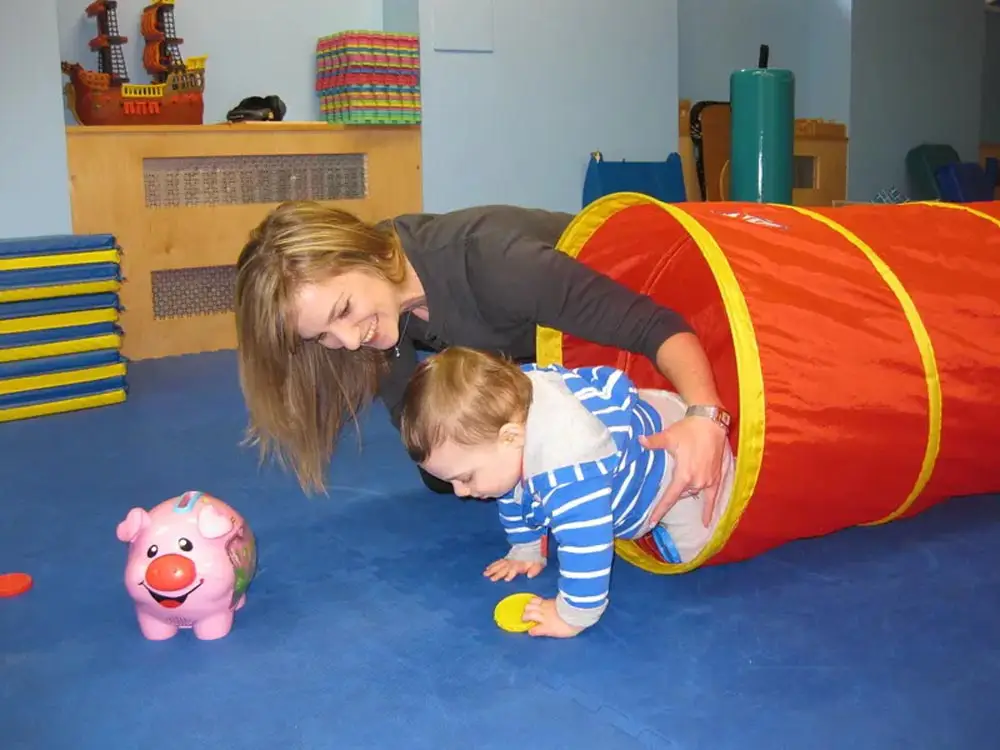

Infant & Toddler PT
Therapy built for the first two years, from tummy time refusal through first steps.

Gross Motor Delays
A tight neck early on can slow rolling, sitting and crawling. We treat the delay and its cause together.
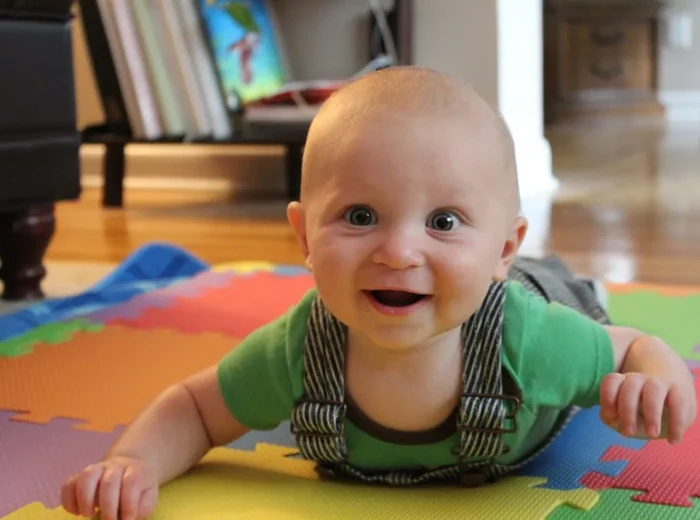
Tummy Time Classes
A small group class for parents who would like tummy time to stop being a fight.