Sensory Processing in Westchester County
The birthday party that ends in the car. The tag cut out of every shirt. The kid who crashes into the couch on purpose. You are not inventing a pattern. There is one, it has a name, and there is something to do about it.
What causes sensory processing difficulty?
Every second, your child's nervous system sorts a flood of information: sound, light, smell, taste and touch, plus two senses nobody talks about, where the body is in space and how it is balanced and moving. Sensory processing difficulty means that sorting does not happen smoothly. Some children get too much signal and shut down or fight it. Some get too little and go looking for more. Most are a mix, and it changes by the hour. Our occupational therapists in Port Chester and Mt Kisco start with the pattern you have already been living with.
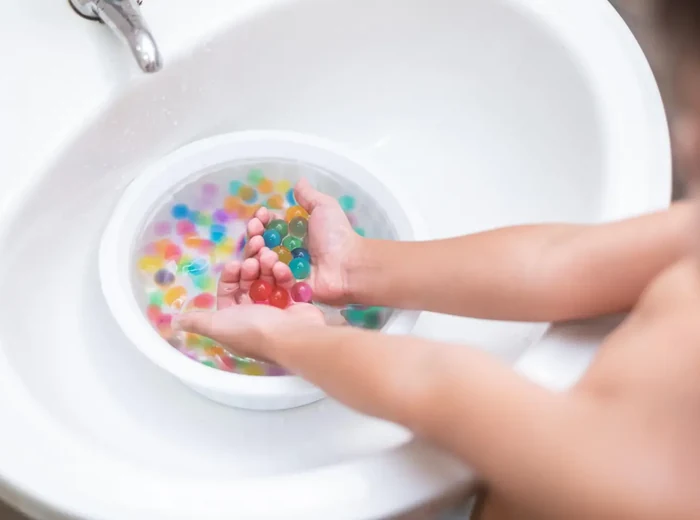
For some children, ordinary input arrives at full volume. The seam in a sock feels like a wire. The hand dryer in a public bathroom is genuinely painful. A birthday party stacks noise, light, smell and unpredictable touch until the system tips and the day ends in the car. What reads as defiance is usually a nervous system under threat.
Other children register input faintly. They do not notice food on their face, a soaked sleeve, a scraped knee, or their name the first few times you say it. They can look tuned out or slow to answer, and they get described as being in their own world. The signal has to arrive louder before the system picks it up.
Then there is the child who crashes into the couch, chews sleeves and pencil tops, hangs upside down off the furniture and cannot stay in a chair. Seeking is not misbehavior. It is a nervous system collecting the input it needs to feel organized. Give it a better way to get that input and the behavior usually settles with it.
Proprioception tells a child where their arms and legs are without looking. When it runs unreliably, they clip door frames, sit on their feet to feel the chair, snap crayons by pressing too hard and play rougher than they mean to. It feeds coordination too, which is why clumsiness so often rides along with it.
The vestibular system, in the inner ear, tracks head position and movement. Some children avoid it and hate swings, escalators and having their head tipped back at the sink. Others will spin until an adult calls time and never get dizzy. Both patterns cost attention, because an unsettled body cannot get still enough to listen.
Underneath all of it sits regulation: getting the body into a state that fits the moment, calm enough to sleep, alert enough to learn, steady enough to lose a game. Children who struggle here look rigid, controlling, inattentive or quick to melt down. The controlling part is usually an attempt to make the world predictable, not a personality trait.
There is no single cause. Sensory differences can follow prematurity or a complicated early medical history, they often run in families, and they appear alongside autism, attention differences and coordination difficulties, though plenty of children have sensory differences and none of those diagnoses. The profile matters more than the origin: which senses, in which direction, in which rooms.
How occupational therapy in Port Chester and Mt Kisco helps.
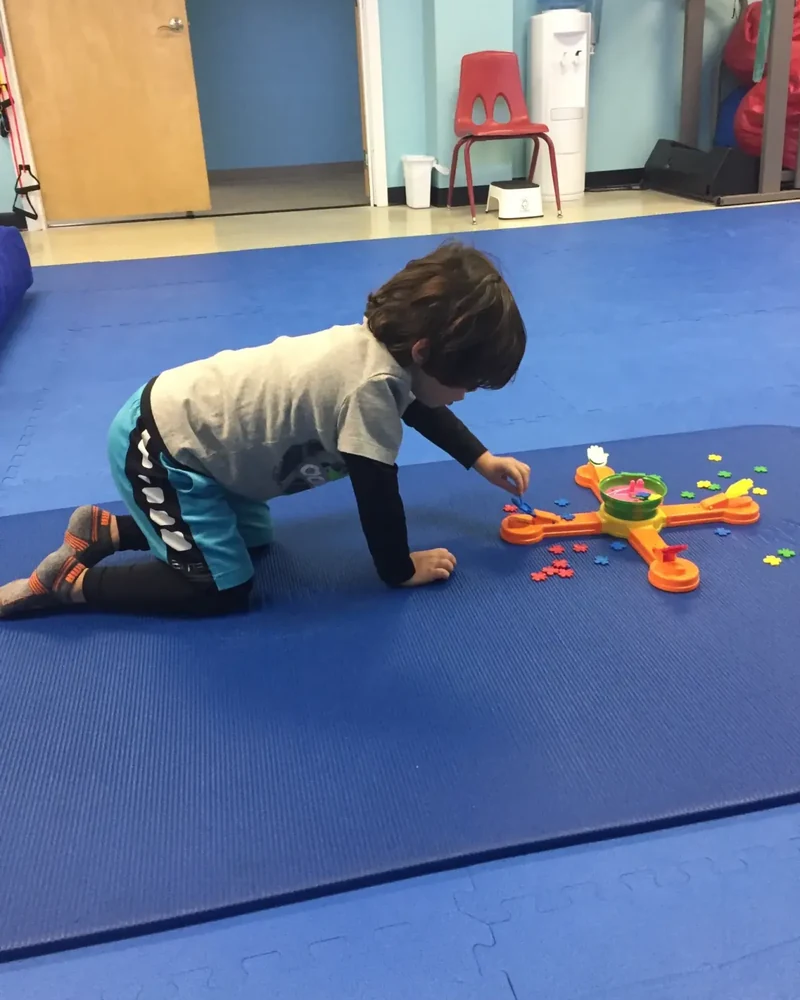
The goal is not to make your child put up with more of what hurts. It is to build a nervous system that can handle more, and to hand your child ways to bring their own body back to steady. An occupational therapist starts by mapping the profile: what your child seeks, what they avoid, and when it comes apart. Sessions then use movement, deep pressure, heavy work, swinging, climbing and touch, dosed deliberately, so the body gets what it needs in an organized way instead of grabbing for it. Your child learns strategies they can name and use, and you get the ones that hold up at home, in the car and in the grocery store.
What to expect from occupational therapy.
The evaluation
We take a full history and watch your child play. What input is sought, what is avoided, what happens at mealtimes, at bedtime and at school. We look at coordination and body awareness too, since they run on the same system. You leave with your child's sensory profile in plain language.
A plan that fits the profile
We build activities matched to what your child's nervous system is actually asking for, and we give it before your child has to ask loudly. Some of that belongs in a session here. Some is short and portable, for before school, after school, and the moments you already know are hard.
Practicing where it is hard
Regulation that only works in a therapy gym is not much use on a Saturday. We rehearse the real situations: the loud room, the unfamiliar texture, the plan that changes. Your child builds a strategy they can reach for alone, and the confidence that it works, which is often the larger win.
Carryover at home and school
You get specific language, setups and routines to share with teachers and caregivers, so the approach is the same in every room your child walks into. Progress is measured against the evaluation baseline rather than a hunch. Individual sessions are 45 minutes, one on one.
If you do not have a prescription from your pediatrician yet, that is not a reason to put off the conversation. Start with the free 15 minute consultation, and our physician resources page has the codes and referral wording your doctor will need.
The Developmental Steps team is extremely knowledgeable and each session is truly tailored to our son's needs. The facility is bright, clean and cheery. They go above and beyond to communicate with parents, give us ‘homework’ to carry over at home and are always available to answer questions.
Sensory rarely shows up alone.

Fine Motor Delays
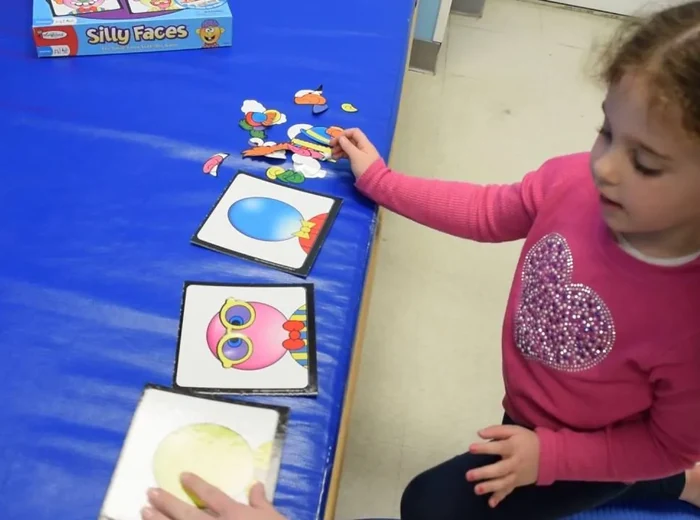
Children who avoid messy or resistive materials get less hand practice, and grasp and handwriting fall behind.

Motor Planning & Executive Functioning
Body awareness is where planning a new movement starts. Unclear feedback makes an unfamiliar task much harder.
Occupational Therapy
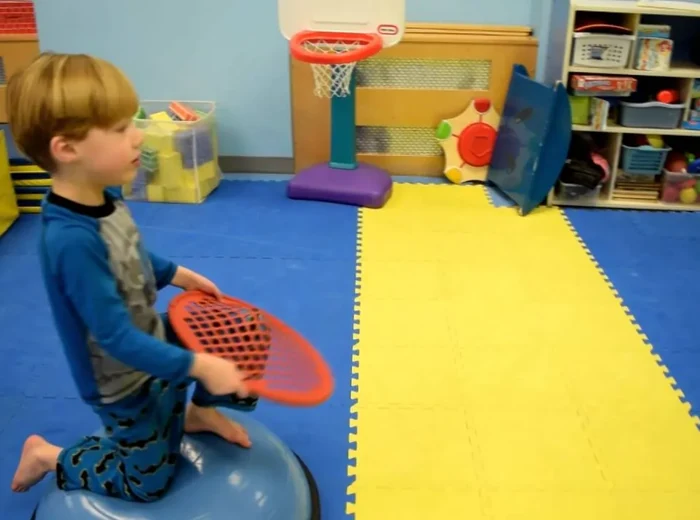
How pediatric occupational therapy works at Developmental Steps, and who it is for.