Gross Motor Delays in Westchester County
Every other child at the party is running. Yours pulls to stand, sits back down, and watches. You were told to give it time, and you did, because that is what you were told. Asking now is not late. It is exactly when it counts.
What causes gross motor delays?
Gross motor skills are the things we do with the large muscle groups: rolling, crawling, sitting, standing, walking, running and jumping. A delay can follow a medical diagnosis, unusual muscle tone, reduced strength or range of motion, or not much time on the floor. Some children do catch up with no help at all. Others fall further behind, or build movement strategies that work now and cost them later. Sorting out which one you are looking at is what an evaluation in Port Chester or Mt Kisco is for.

Tone is the resting tension in a muscle before your child asks it to do anything. When tone is low, joints sit loose, posture slumps, and every position costs more effort to hold. These are the children who lean on furniture and melt into the couch. They are not lazy. They are working harder than everyone else to do the same thing, so they run out of gas first.
A baby born early is often meeting milestones on their adjusted age rather than their birthday, which is normal and worth measuring properly. A long NICU stay, early surgery, or a genetic or neurological diagnosis can change the timeline too. Where there is a diagnosis, therapy works with it rather than around it, and the plan gets built for the child in front of us.
Motor milestones are strength events. Sitting needs a trunk that can hold itself up. Pulling to stand needs hips and legs that push through. Stairs need one leg to hold the whole body while the other travels. When strength is the missing ingredient, a child finds a workaround, and the workaround usually looks like avoiding the skill entirely.
A skill your child does not have the range to perform will not show up no matter how much they practice. Tight heel cords keep heels off the floor. Tight hips make crawling and stairs awkward. An untreated head tilt makes rolling and reaching lopsided, which is why torticollis and gross motor delay so often turn up on the same evaluation.
Babies build head control, shoulder strength and trunk stability by pushing against the ground. Modern life is full of seats, swings and carriers, all of them useful, all of them time not spent on a mat. If tummy time has been a battle in your house, you are in good company. The fix is not more of what your baby hates, it is different positions that do the same work.
Once a skill feels unsafe, children stop practicing it, and practice is the only thing that makes it safe. A toddler who fell hard while cruising will stay on the floor. A three year old who is last up the climbing structure starts saying they do not want to go to the park. That is a motor problem in a behavior costume, and it moves when the skill underneath it moves.
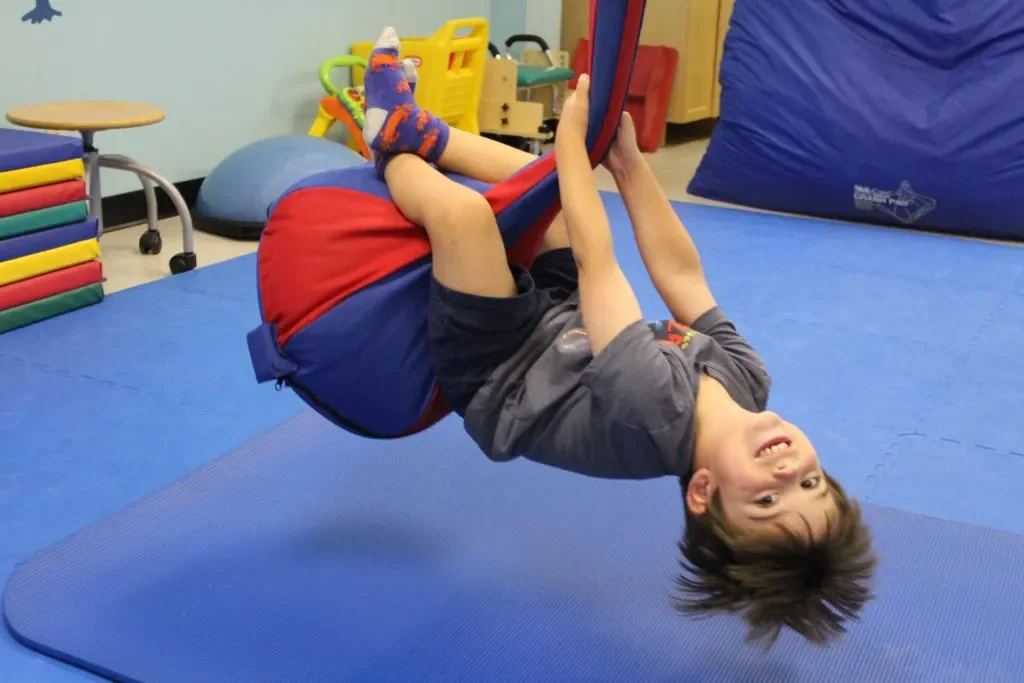
How physical therapy in Port Chester and Mt Kisco helps.
Our pediatric movement specialists start by finding out which ingredient is actually missing. Standing up from the floor needs range, strength, balance, timing and enough confidence to try it, and a child can be short on any one of those. We look at the milestones your child has and the ones they are close to. Then the skill gets broken into pieces small enough to win at, and put back together through play. Obstacle courses, climbing and crawling tunnels are not filler. Repetition builds a motor skill, and a child will repeat something fifty times if it is fun and twice if it is not.
Two practical things. New York State requires a physician's prescription for pediatric physical therapy, and our physician resources page gives your pediatrician the codes and referral language. And Developmental Steps is not an Early Intervention provider. Many families here already receive those services and come to us for support alongside them. Others come because they do not want to wait out an approval process first.
What to expect, from the first visit on.
Pain
Most children with a motor delay are not in pain, so this phase is about the difficulty rather than pain. The evaluation measures range, strength, balance and where your child sits against typical milestones, and asks what is driving the gap instead of only naming it. You leave with a baseline, a plan, and a straight answer about what we think is going on.
Prime
Next we build the raw ingredients the skill needs: range at the ankles and hips, trunk and hip strength, endurance, or tolerance for a position your child currently refuses. Nothing here looks like exercise from the outside. It looks like crawling through a tunnel, carrying something heavy, or climbing to get the good toy.
Perform
Then we go after the milestone itself. Pulling to stand, cruising, walking, running, stairs with one foot per step, jumping with both feet leaving the floor. The skill gets graded so your child succeeds early and often, then the support gets pulled back a little at a time until they are doing it alone and know it.
Prevent
A skill that only exists in the clinic is not a skill. You get a home program built around what your child already likes doing, plus what to do at the playground and on the stairs at home. We re-measure as we go, and the goal is a child who keeps up on their own.
We came to Developmental Steps because our son’s Pre school teachers had said that he is a little behind other kids when it comes to going up/down the steps, and other physical activities. He had started walking late and was always a little under confident / hesitant to try new things in the playground.
A delay rarely travels alone.
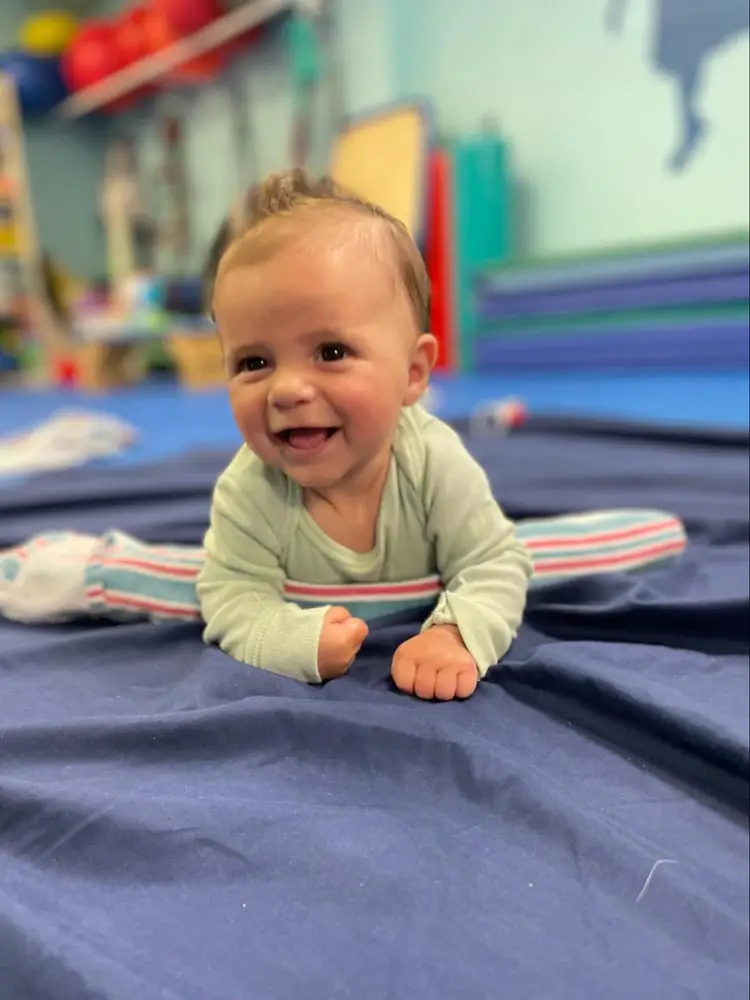

Torticollis & Plagiocephaly
An untreated head tilt is one of the quietest reasons early milestones arrive lopsided or late.
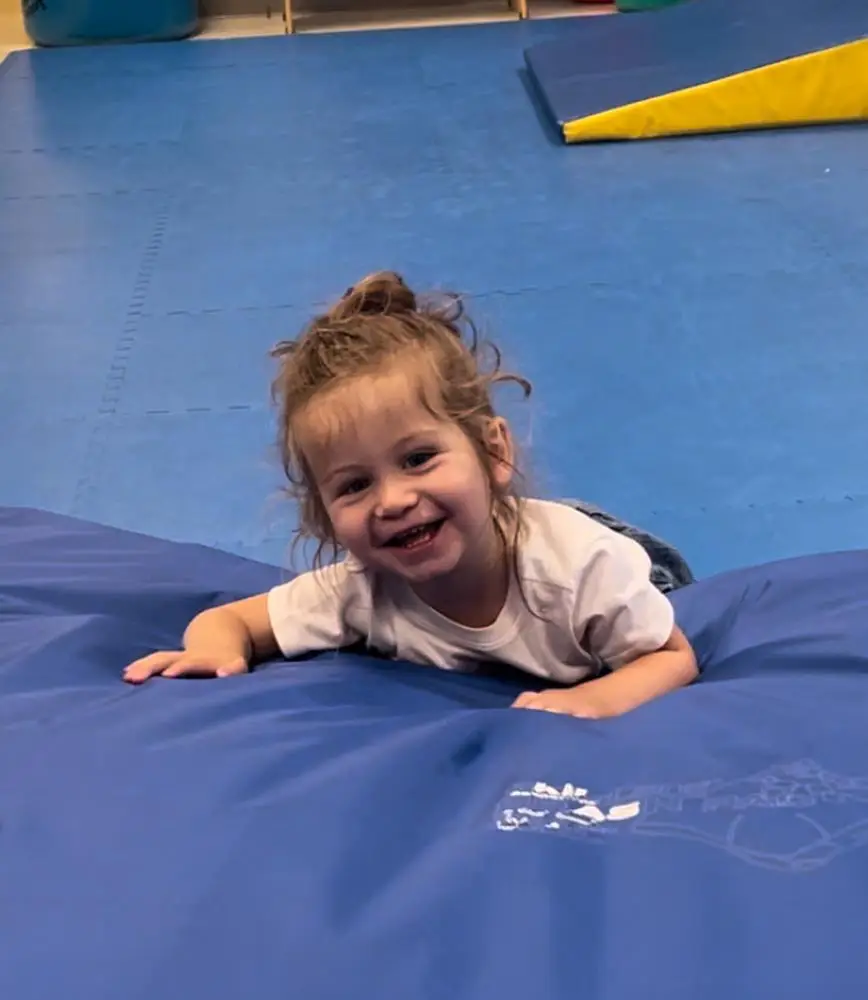
Core Strength & Conditioning
When a child tires fast, slumps, or leans on everything, the trunk is usually where to start.
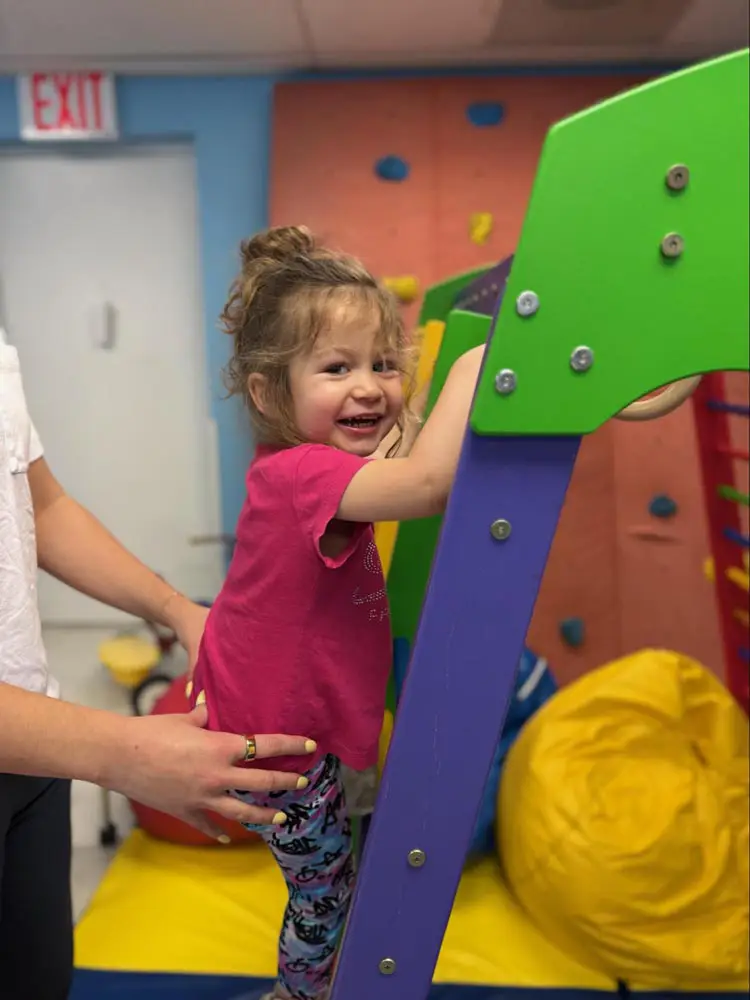
Motor Coordination
For the child who has the milestones but still trips, misses catches, and sits out at recess.