Motor Planning & Executive Functioning in Westchester County
The homework that swallows the whole evening. The backpack that never gets packed. A kid who can tell you exactly what needs doing and still cannot start. That gap between knowing and doing is a skill set, and skill sets can be taught.
What causes difficulty with motor planning and executive functioning?
Motor planning, or praxis, is how a child comes up with the idea for an unfamiliar action, organizes the steps and carries it out. Executive functioning does the same job for thinking: starting, sequencing, holding instructions, tracking time, changing plans. The two lean on each other, which is why the child who cannot work out how to climb an unfamiliar structure is so often the same child whose homework takes all evening. Our occupational therapists in Port Chester and Mt Kisco start by finding which stage is actually breaking down, because each one needs a different kind of help.
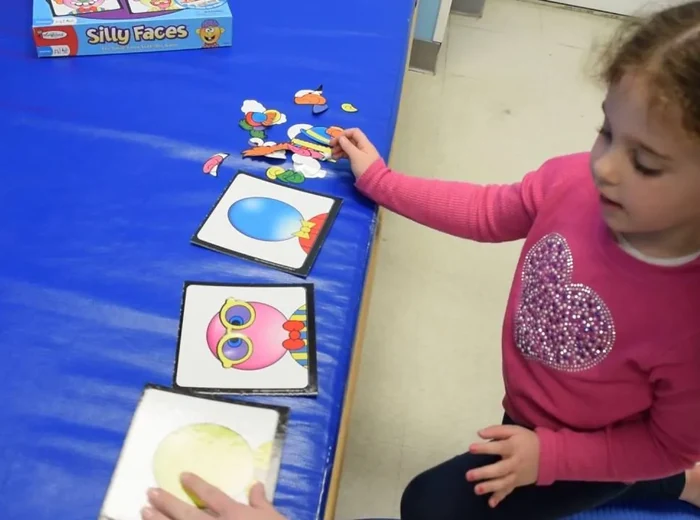
Planning starts before any movement happens, with imagining what to do with a new object or a new space. Some children do beautifully once shown and go blank when a task is open ended. They hover at the edge of the playground, or use every toy the same way. That is not a missing imagination. It is the first stage of planning stalling out.
Knowing the steps and knowing their order are two different skills. A child can know a shirt goes over the head and still put an arm through the neck hole, or start a school project somewhere in the middle. Steps get skipped, usually the dull ones. Broken into parts, with the order made visible, the same task often becomes doable.
Task initiation is the gap between knowing and beginning, and it is the one parents describe most. Your child can recite the assignment and still sit in front of it. The stall is usually about not seeing a first step small enough to take. Naming that first step out loud, concretely, restarts more homework sessions than any amount of reminding.
Working memory is the shelf where instructions sit while a child acts on them. If the shelf is small, the second half of a two part direction falls off somewhere on the stairs. Your child comes back empty handed and it looks like they were not listening. Written lists, pictures of the sequence and shorter chunks take the load off.
Some children genuinely cannot feel time passing. Twenty minutes and two hours read about the same from the inside, so a task gets pushed to the last possible moment and then panic does the work. Making time visible with timers and checklists, and rehearsing how long a job actually takes, builds a clock that guessing never will.
Motor planning runs on sensory information. A child who is unsure where their limbs are has to rebuild the plan from scratch each time instead of banking it, so an unfamiliar movement takes them far more attempts than it takes their friends. This overlaps with sensory processing, and it is one reason the two get assessed together.
Once a task has gone badly a few times, avoidance is a reasonable response. Children put it off, negotiate, clown or refuse, and the pattern gets read as attitude when it began as difficulty. Rebuilding the underlying skill is half the job. The other half is rebuilding the willingness to try, which only comes from wins.
How occupational therapy in Port Chester and Mt Kisco helps.
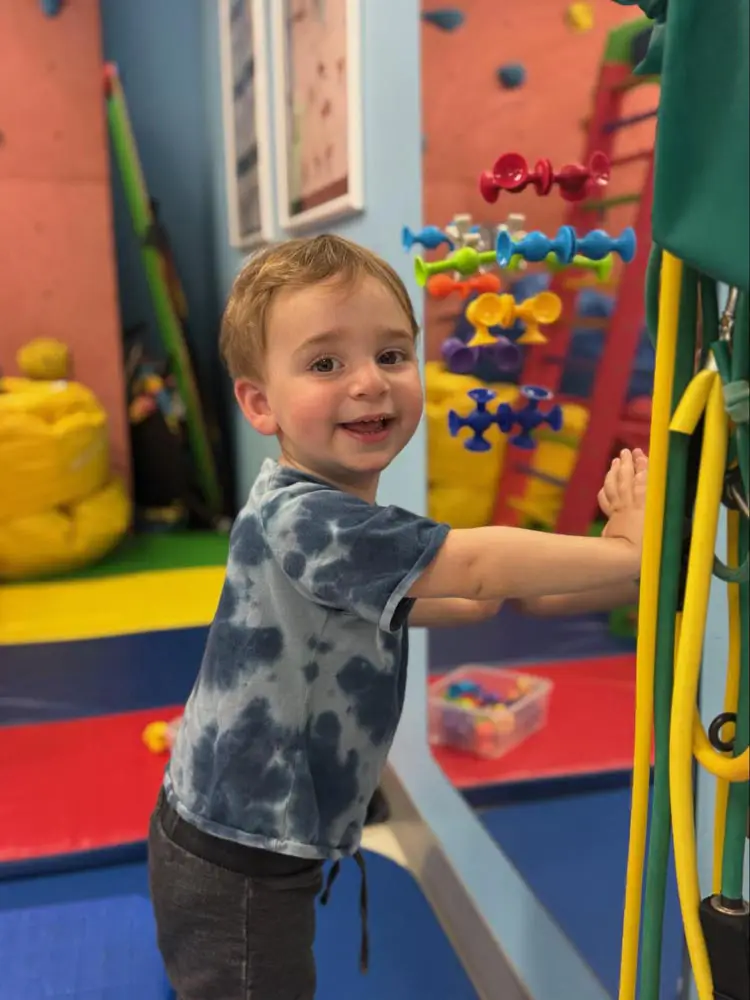
Occupational therapy here works on the process rather than the individual task, because a child who is only taught to tie shoes has learned shoes. Your child's occupational therapist sets up activities that demand a plan: obstacle courses your child designs, multi step crafts, games whose rules keep changing. Then the therapist deliberately backs off, so your child does the organizing instead of following instructions. What gets built is a routine they can run alone: look at what needs doing, break it into steps, take the first one, check the result. It is meant to transfer, because the point is a child who can handle the next unfamiliar task without you standing next to them.
What to expect from occupational therapy.
The evaluation
We watch how your child handles an unfamiliar task, not only a practiced one. Where does it break down: the idea, the order of the steps, starting, remembering, or finishing? We ask about mornings, homework and the moments that cause the most friction at home. You leave knowing the specific stage that needs work.
Making the invisible visible
Early sessions put the planning process somewhere your child can see it: steps laid out, checklists, timers, and talking the plan through before doing it. A child cannot manage a process they cannot picture. Once it is visible, it can be practiced like any other skill.
Practicing on real tasks
Then we use tasks that matter: getting out the door, packing a bag, a multi step assignment, a game with rules. Difficulty climbs as your child takes over more of the planning, and support comes away on purpose rather than by accident.
Handing it over
The last stage is independence. Prompts fade, your child runs the routine, and you and their teachers use the same language so it holds up in every setting. Progress is measured against the evaluation baseline. Individual sessions are 45 minutes, one on one.
If you do not have a prescription from your pediatrician yet, start with the free 15 minute consultation anyway. Our physician resources page has the codes and referral wording your doctor will need.
Highly recommended. Tara has been incredible at inspiring our teen to follow through with his at home regimen. She is motivating and has made more progress with him in the past 2 months than anyone he has ever worked with. He is doing better than we thought possible.
Planning touches everything else.


Sensory Processing
Planning a new movement depends on clear body feedback. When that information is unreliable, every unfamiliar task costs more.
Fine Motor Delays
Multi step hand tasks like buttons, laces and written work sit at the meeting point of planning and hand skill.
Occupational Therapy
How pediatric occupational therapy works at Developmental Steps, and who it is for.