Assessment & Plan in Westchester County
The first visit is a conversation and a play session. You leave knowing what your child can do, what is getting in the way, and exactly what to work on at home.
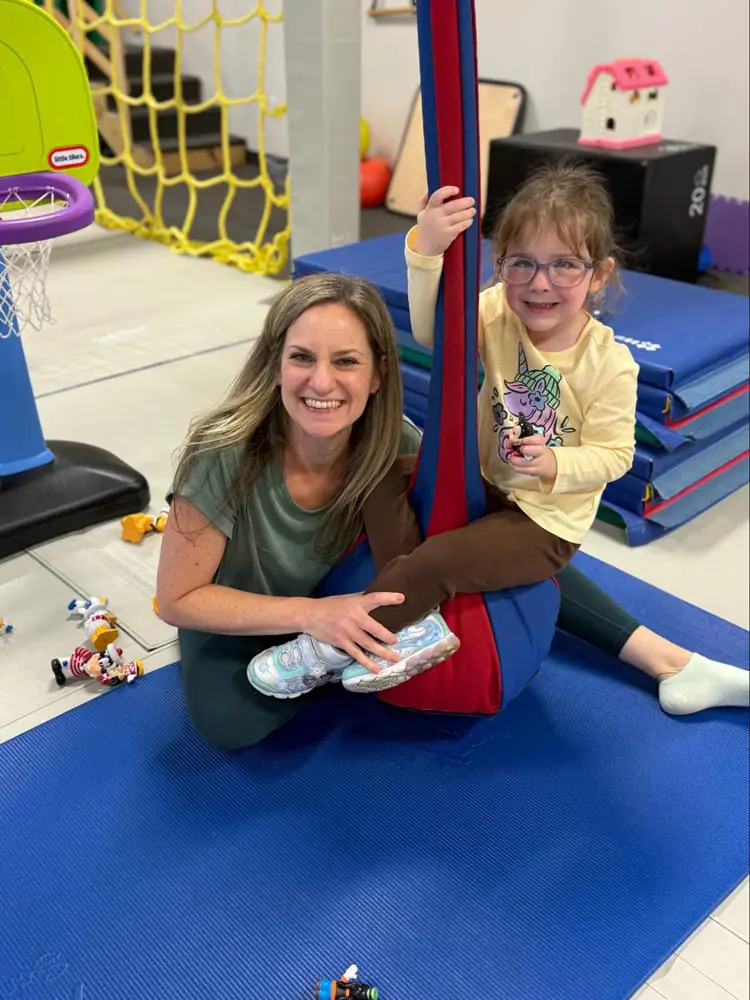
What happens at your child's first evaluation?
You have been watching something for weeks. The way he pushes up on one arm and never the other. The way she still will not take weight through her legs while other babies her age are cruising the furniture. You are not imagining it, and you are not overreacting for asking someone to look. An evaluation is not a verdict on your parenting. It is a measurement, and a measurement is the thing that finally replaces guessing. Every child seen at Developmental Steps in Port Chester or Mt Kisco starts with an initial evaluation that looks at the whole child rather than the single thing that worried you. A licensed pediatric physical therapist watches your child move, gets on the mat with them, and checks the pieces that a motor skill is built from: joint range of motion, muscle strength and tone, balance reactions, coordination between the two sides of the body, and how your child organizes a movement they have never tried before. What comes out of it is a complete picture of strengths as well as challenges.
Most of the evaluation looks like playing, because with a child that is the only honest way to test anything. A toddler will not perform a squat on request, but they will crouch to pick up a favorite toy fifteen times in a row, and that tells a therapist a great deal about hip strength and balance. Your therapist will also ask you what an ordinary day looks like, what your pediatrician has said, what happens at daycare, and what you most want to change. Specific goals are then set and a formal plan is put in place to reach them. Before you leave, the therapist teaches you a few simple exercises to do at home and has you practice them right there, hands on, so you are not trying to reconstruct them from memory in your living room that night.
Who it's for.
An evaluation is the right next step whenever the gap between what your child is doing and what you expected has stopped closing on its own. These are three of the reasons families book one.
The baby who always looks the same way
He turns his head to the right to track you, to feed and to sleep, and almost never to the left. You have tried propping him with a rolled blanket and it is not holding. An evaluation measures how many degrees of rotation he actually has on each side, so the tilt stops being something you argue about and becomes a number that either improves or does not.
The toddler everyone says will catch up
She is fifteen months and not pulling to stand. Two people have told you their cousin walked at nineteen months and turned out fine. Maybe. An evaluation tells you which specific ingredient is missing, whether that is trunk strength, single leg balance or plain confidence, and gives you something to work on instead of a waiting game.
The school age kid who skips the playground
He falls more than his friends, sits out of gym, and has started saying he is bad at running. An evaluation separates a coordination problem from a strength problem from an endurance problem. The plan that follows targets the one that is actually holding him back, so he stops paying for it socially.
What to expect at the first visit.
Plan on 45 minutes. Dress your child in comfortable play clothes, since they will be moving for most of it. Here is the shape of the visit from the moment you walk in.
You talk first
Before anyone touches your child, the therapist asks what you have been seeing and how long you have been seeing it. What worries you at bedtime. What your pediatrician said. What your child is like when they are tired. Your account of the last six months is information no standardized test can collect.
Your child plays and we measure
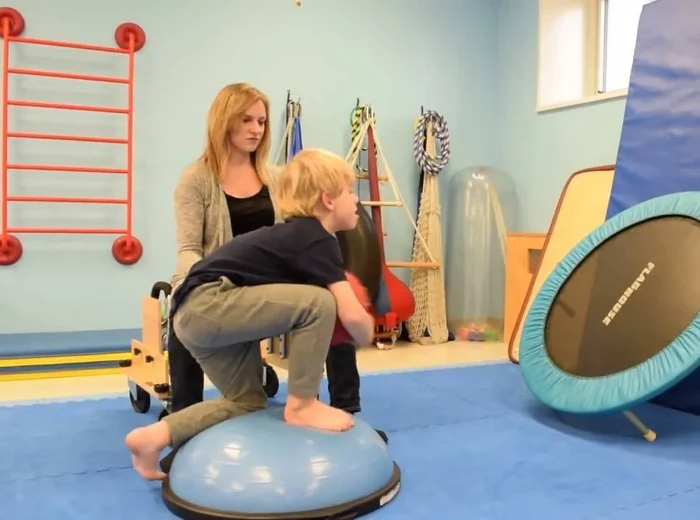
Then the mat, the toys, the swings and a therapist watching closely. Range of motion gets checked at the neck, hips and ankles. Strength, balance and coordination are tested through activities that read to your child as a game. Most children settle within a few minutes, and plenty of them decide they would like to stay.
You leave with a plan and homework
The therapist walks you through what they found in plain language, sets specific goals with you, and puts a formal plan in place to reach them. You practice the first home exercises yourself, hands on, before you go. Strong relationships with parents dramatically increase a child's success, so the communication does not stop at the door.
New York State requires a physician's prescription for pediatric physical therapy, so your pediatrician will need to write one before treatment begins. You do not need it in hand to talk to us. A free 15 minute consultation can tell you whether an evaluation is even the right next step, and our physician resources page carries the ICD-10 codes and referral language your pediatrician will want.
As a parent it is difficult to acknowledge that your child needs a service beyond what you can provide, but once you know you need additional support, you want to make sure you find the best option for your child.
Where to go next.

PT Solutions Overview
Every physical therapy service we offer, and which one fits the thing you have been noticing.

Physician Resources
The ICD-10 codes and referral details your pediatrician needs in order to write the prescription.

Insurance
The out-of-network carriers we work with, and how to find out what your own plan actually covers.