Infant & Toddler Physical Therapy in Westchester County
You were told to give it time. One on one sessions that help your baby reach the next motor milestone, and show you exactly what to do between visits.
What is infant and toddler physical therapy?
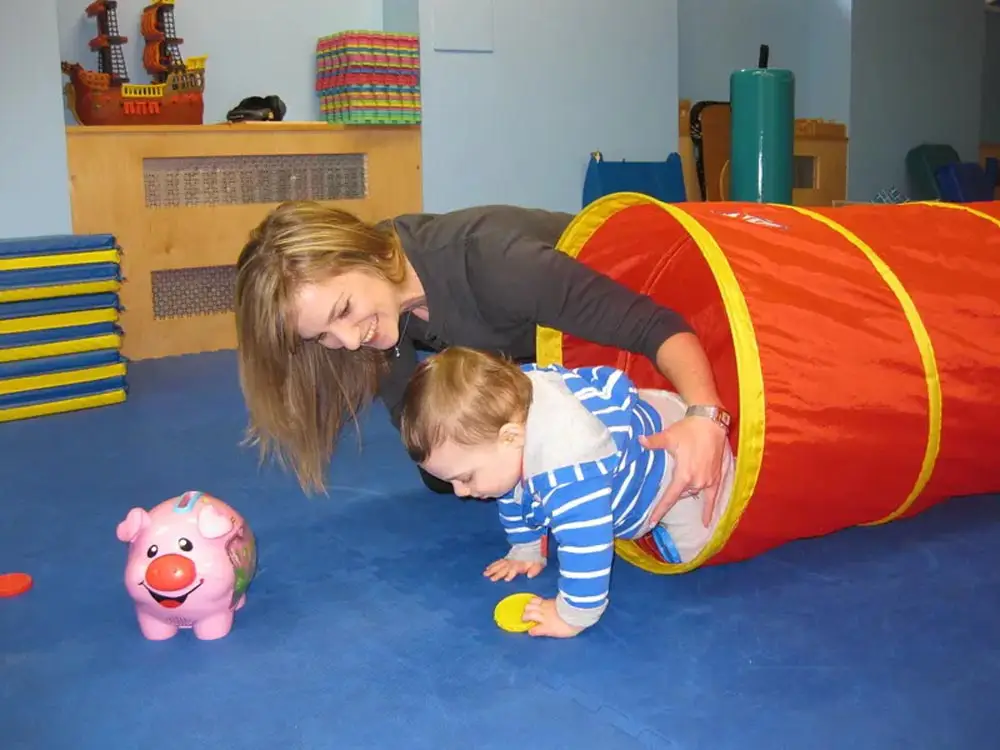
Nobody warns a new parent how much of the first year is measuring. Rolling around six months. Sitting by nine. Pulling to stand near a year. Then your baby is not doing the thing, every chart you find says something slightly different, and the people around you say give it time. You were being patient, not negligent. Starting earlier simply gives your child more runway. Infant and toddler physical therapy is one on one work with a baby or young child who is delayed in motor milestones, moving asymmetrically, or uncomfortable in the positions they need in order to progress. At Developmental Steps in Port Chester and Mt Kisco, that means a licensed pediatric physical therapist down on the floor with your child, using handling, positioning, play, swings and equipment to give the nervous system the specific experience it has been missing. Babies learn to move by moving. A baby who dislikes tummy time gets very little tummy time, which means very little practice at the neck and upper back strength that rolling and crawling are built on.
The other half of the job is you. A therapist has your child for 45 minutes. You have your child for the rest of the week. So sessions are built to be copied: the therapist shows you the carry, the stretch, the position change, then has you do it while they watch, so what happens in the clinic keeps happening at home. Parents also learn how to head off the setups that create problems in the first place, such as long stretches in car seats, swings and bouncy seats, which quietly remove a baby's chances to push against a surface and build strength. This is not adult physical therapy scaled down for a small body. Infant handling, milestone sequencing and play based motivation are their own skill set, and this practice treats children only.
Who it's for.
This is for the youngest patients we see, from the first weeks of life through the toddler years. These are the situations that most often bring a family in.
The baby who hates tummy time
She protests within thirty seconds of going down on her front, so it happens less and less, and now she is behind on rolling. Positioning changes and graded tolerance work usually turn tummy time from a fight into something she can hold for a few minutes at a stretch, which is where head control and rolling come from.
The baby who is not symmetrical
His head tilts one way, he tracks you over one shoulder only, and a flat spot is developing on the back of his skull. Range of motion gets measured in degrees on both sides, then stretching, positioning and play even it out, so his head shape and his rolling stop being limited by one tight muscle.
The toddler who has not started walking
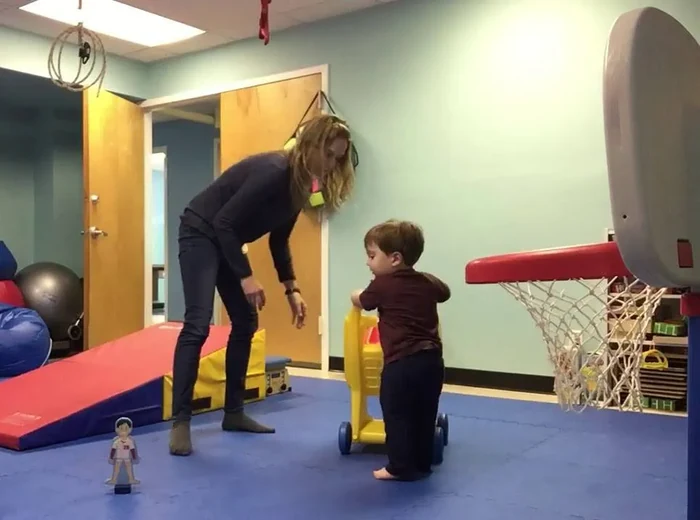
He is fifteen months, cruising the couch a little, and has no interest in letting go. An evaluation sorts out whether the missing ingredient is single leg balance, hip strength or confidence, and the plan targets that one thing, so he can go chase his brother across the yard.
What to expect in a session.
Individual sessions are 45 minutes, one on one, mostly on the floor. Bring comfortable clothes and a bottle if your baby will want one. Here is how a visit runs.
We start where your baby is
No baby performs on command, so the therapist follows your child's state that day. If she is alert, the harder work happens first. If she is fussy, the session opens with settling and positioning. Feeding, sleep and daily routines get discussed too, because they shape how much practice a baby gets outside the clinic.
Handling, positioning and play
Your therapist uses their hands to guide your baby into the movement they are trying to learn, then backs off the support so your child does more of it themselves. Swings, mats, balls and toys make the position worth staying in. At this age, motivation is most of the battle.
You practice before you leave
The therapist teaches you the stretches, carries and positions that carry the work into the week, and asks you to do them right there so you are not guessing at home that night. Goals get re-measured over time and the plan changes as your child changes, including when it is time to finish.
Many of the families here are already receiving Early Intervention services and come to us for additional support alongside them. Others come because they do not want to wait out an approval process before starting. Developmental Steps is a CPSE provider, but not a public Early Intervention provider. Either way, we work with where your child is now.
Seeking PT for an infant can be scary and overwhelming, but they embraced my son with open arms and the progress he’s seen in just 6 short weeks has been truly impressive. They always take their time to explain the exercises so that we can do them at home and are so clearly invested in our son’s success.
Where to go next.


Torticollis & Plagiocephaly
For the baby with a head tilt, a strong side preference, or a flattening spot on the skull.
Tummy Time Classes
Learn the positioning and the tricks that make tummy time tolerable, then useful.

Gross Motor Delays
When rolling, sitting, crawling or walking is late and the gap is not closing on its own.