Core Strength and Conditioning in Westchester County
Clumsy is rarely just clumsy. When a child falls more than their friends and starts calling themselves bad at running, the middle of the body is usually the place to look first.
What is core strength and conditioning?
He trips over the flat part of the sidewalk. She slides down in her chair at dinner until her chin is near the plate. He asks to be carried after two blocks. You have probably been told it is a phase, and sometimes it is, but very often the pattern points at the same place: the muscles that hold the middle of the body steady. Core strength is not about a flat stomach. It is the deep coordination of the trunk, hips and shoulder girdle that gives a child a stable base to move from, and every skill above the waist or below it is built on that base. When the trunk is soft, the arms and legs have to work harder to do ordinary things, so the child gets tired, sloppy and frustrated faster than their friends do. The pediatric physical therapists at Developmental Steps in Port Chester and Mt Kisco are movement experts. Core strength and conditioning is the work of finding which part of that base is not holding, then rebuilding it with activities a child will actually repeat.
Conditioning is the other half of it. A child who avoids the playground gets less practice, which makes the next attempt harder, which makes them avoid it more. Breaking that loop takes graded practice: a task set just past what your child can already do, repeated often enough for the body to learn it, then made slightly harder. We also educate parents on the underlying factors that may be driving the clumsiness, from low muscle tone to foot position to simple lack of exposure, and we make recommendations about proper shoe choices, which matter more than most families expect. Children often struggle when faced with new and age appropriate gross motor activities, and a child who struggles and becomes frustrated is at real risk of secondary problems, including lost confidence and injury. Strategies that strengthen the core and improve conditioning tend to hand the confidence back at the same time.
Who it's for.
Core work helps most when the problem shows up as falling, tiredness or avoidance rather than pain. These are three of the situations families bring us.
The child who falls more than their friends
He trips on nothing, lands hard, and has started hanging back at the climbing structure. Falling that often is usually a stability problem rather than a personality trait. As the trunk and hips get stronger, the quick recovery step that catches a stumble starts arriving in time, and the falls thin out.
The kid with tired legs and an aching back
She says her legs hurt after a short walk and slumps in every chair she sits in. Flat feet, low muscle tone and a weak trunk often travel together. Strengthening the legs and core, sometimes alongside good orthotics, treats the cause instead of the ache, so playing stops costing her so much.
The one who says they are bad at sports
He is picked last, sits out in gym, and tells you he just does not like running. Avoidance is often a strength problem wearing a confidence costume. Graded practice at the right level lets him succeed often enough to keep trying, and keeping up with the group stops feeling out of reach.
What to expect in a session.
Individual sessions run 45 minutes, one on one, and they look far more like a gym class than a treatment. Here is how the work is structured.
Find the weak link
Your therapist watches your child run, jump, climb and sit, then tests trunk, hip and ankle strength directly. Foot position and shoe wear get a look too. The point is to identify which specific part of the base is giving way, because a child who falls from ankle instability needs different work than one who falls from a soft trunk.
Build the base through play
Then the actual work, disguised as obstacle courses, animal walks, ball games and climbing. Difficulty goes up gradually so your child is always working just above their current level and almost always succeeding. Repetition is what builds a motor skill, and children repeat a game far longer than they repeat an exercise.
Take it home and keep it
You leave with a home program, ideally a handful of activities that fit into a normal week rather than a second job. Progress is re-measured against the goals set at the evaluation and the plan is adjusted from there. Our exercise video library gives you demonstrations for the ages we see most.
Shoe choice matters more than most families expect. A shoe that is too soft through the middle, too heavy, or half a size too big changes how a child loads the foot and can make an unsteady walker look worse than they are. Bring the shoes your child actually wears every day and ask your therapist to look at them.
At the eval, they validated my feelings and laid out a plan. It was the first time I felt heard. We got great orthotics that make her feet feel happy AND worked on exercises to strengthen her legs and core to actually correct the problem, not just treat the symptom. Now, she can fully be a kid.
Where to go next.

Gross Motor Delays
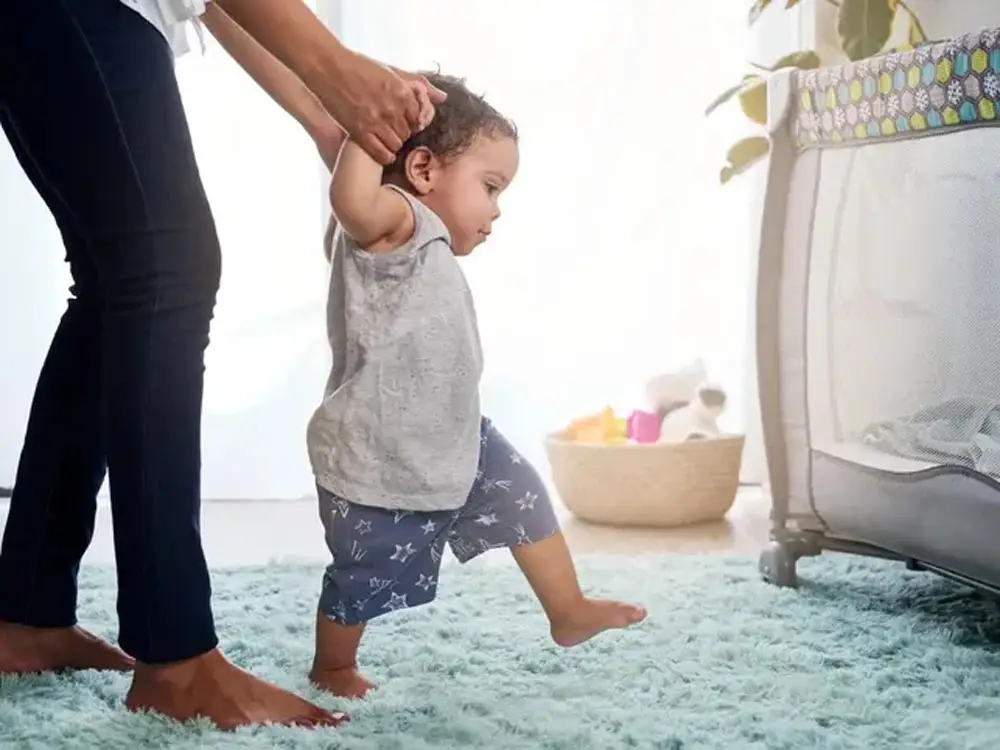
When a child is behind on walking, running, stairs or jumping, and the gap is not closing.
Motor Coordination
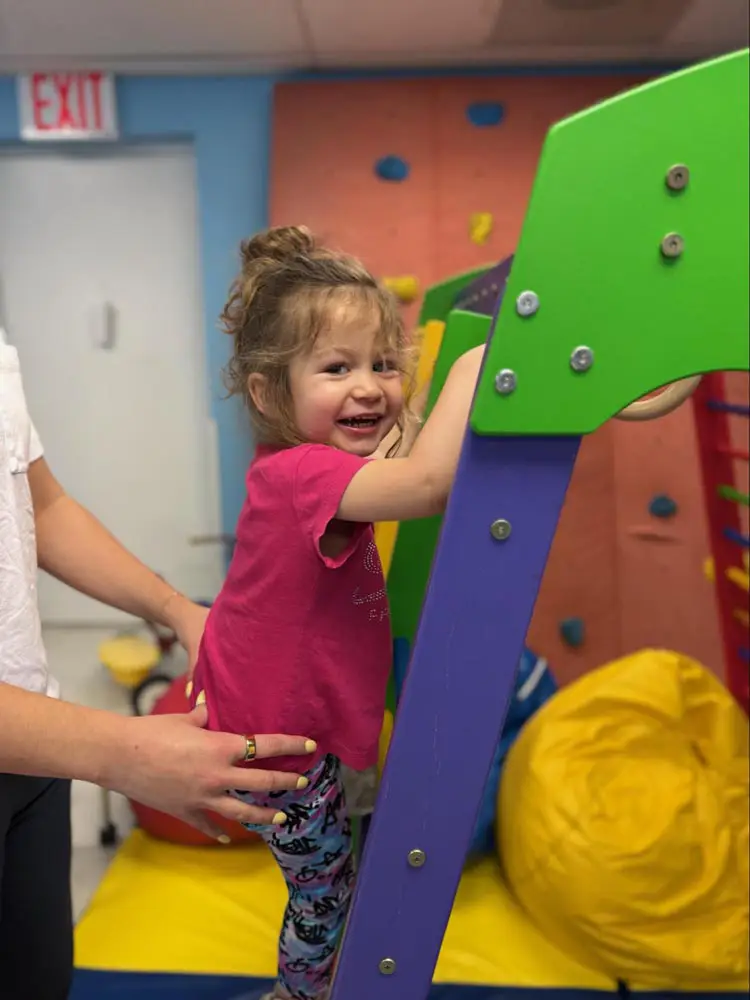
For the kid whose body will not quite do what their brain asked it to do.
Wellness Program
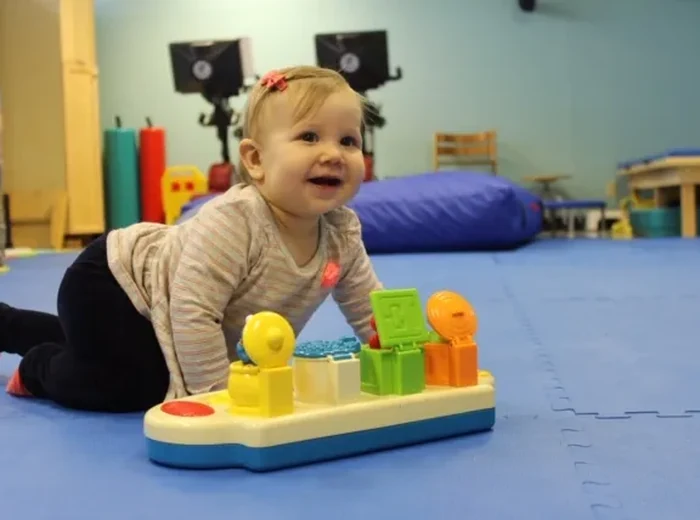
Where children go to keep the strength and stamina once formal therapy is finished.